Heidedal might look and sound like your normal so-called “coloured” township, but it has never been “just coloured”.
If we take a step back and look at the place where Heidedal has its roots, we will see that its ties with townships like the neighbouring Batho, Bochabela and Phahameng are too strong for it to be “just coloured”.
According to history the first “coloured” people who came to Bloemfontein during the height of apartheid used to live in a place called Cape Stands in the Batho area where they lived in harmony with their black brothers and sisters.
But the apartheid government had other ideas. To sow division among the people on the “wrong side of the track”, coloured people were forcefully removed and dumped in an open field across the road from Batho. This place had many names over the years, like Cairo – from Cape (Stands) to Cairo – Heatherdale, Ashbury, and most recently, Heidedal.
Although separated by the Group Areas Act, most of the original residents of Heidedal maintained good relations with their brothers and sisters across the road, therefore, when apartheid was abolished, it was an almost natural and seamless process for Heidedal to become an integrated society with people from different backgrounds and cultures finding a home or employment within its borders.
With seven excellent schools, great health and sports infrastructure, a growing local economy and a very active civil society, Heidedal is an attractive proposition for anyone looking to find a new home, plus: house prices are still quite affordable.
But although it could be viewed these days as a well-developed suburb with good infrastructure, it still has its fair share of problems. Some of these problems stem from a perceived lack of investment in Heidedal by the local and provincial government.
The “neglect” includes deteriorating road infrastructure, lack of job opportunities for Heidedal youth, general service delivery issues, etcetera. This situation leaves most of Heidedal’s residents feeling marginalised and disenfranchised, rightfully or wrongfully so. Some of the visible effects include growing poverty, among others.
But some of Heidedal’s problems are also self-inflicted. Despite its reasonably well-manned police station and the fact that most Heidedal residents are community activists at heart, the drug trade got a foot in the door and has grown exponentially over the years. The effects can already be seen in a range of social ills plaguing the youth in the area.
This “suicidal” streak is also evident in the new litter trend in Heidedal. If the municipality doesn’t pick up rubbish, some people will use every available open space to dump their rubbish, not considering what health risks they are creating for their children.
Plus, the rubbish will become such an eyesore that companies might decide to take their business elsewhere, which will lead to job losses and ultimately increased poverty.
– PIETER DELPORT
[email protected]
ʼn Gemeenskap wat omgee vir mekaar

Angelique Kemp, die eerste wenner van die Heidedaller van die Jaar-kompetisie in 2007, praat met groot lof van die Heidedalse gemeenskap waar sy grootgeword het.
Sy gesels graag oor die jong, rou talent in Heidedal wat hulself leer om die beste in hul veld te wees. “Hulle is so suksesvol, maar kry nie altyd die geleentheid nie,” meen sy.
Sy spog ook oor die hegte “familiebande” wat daar tussen gemeenskapslede is. Een voorbeeld is hoe mense mekaar tydens begrafnisse ondersteun, net omdat die gemeenskap een groot familie is.
“Ons kan as gesinne nog ons kinders in Heidedal grootmaak. Ons is ook nog een van die veiliger gemeenskappe. Ons kan nog met vakansie gaan en as ons terugkom weet daar sal geen skade aan ons huise wees nie,” vertel sy trots.
Sy sê die mense van Heidedal is boonop nog vol lewe. As mense na ‘n winkelsentrum stap, is almal vriendelik, daar speel oral musiek en mense geniet die lewe.
“Wat die gemeenskap se vennootskappe met die private en openbare sektor betref, lyk dinge rooskleurig. Daar is rêrig ‘n sterk band tussen die gemeenskap en dié twee sektore,” meen sy.
Sy verwys ook na Heidedal se geografie. Daar is sewe skole binne loopafstand van inwoners se huise is en opvoeding is regtig nie te duur nie. “Dit is ‘n pluspunt vir die jeug in ons gemeenskap.”
Wat haar die blyste maak, is die feit dat die gemeenskap aan alles deelneem en saamstaan. “Almal koester min of meer dieselfde drome, en dit is om die beste van Heidedal te maak,” sê sy. “Heidedal se mense glo in hulself!”
Natuurlik is daar ook die Angel Foundation, ‘n organisasie wat die lede van hul gemeenskap help om hul drome te bereik. Kemp is die voorsitter van die organisasie. “Charity begins at home and Heidedal is home,” laat sy op Engels van haar hoor.
Die Angel Foundation is sowat drie jaar oud en het reeds verskeie leerlinge gehelp om oorsee te gaan. Hulle hou ook verskeie geldinsamelings, insluitend die skoolskoen-projek, Fairytale-projek, potjiekosdag, gholfdag en ook die Autumn Queens Ladies’ Tea, wat jaarliks aangebied word.
“Een ding van ons gemeenskap wat soos ‘n paal bo water staan, is dat ons nog omgee vir mekaar.”
– JERETHA OOSTHUIZEN
[email protected]
The ‘Dal’ still faces many challenges
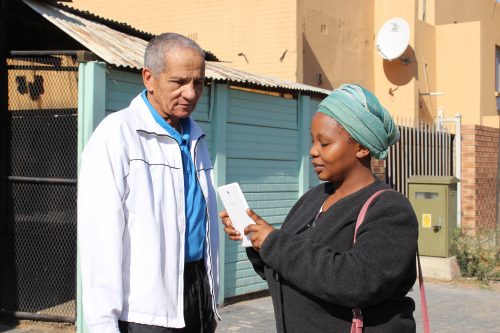
Heidedal is one of Bloemfontein’s oldest communities, and while it has many milestones to celebrate, the community continues to face many social challenges that affect all who are living in it.
David Beck, a pastor at the Gospel Workers’ Ministry Church in the area, says when he remembers how vibrant the youth of Heidedal once were, he feels saddened by the decline in social involvement by young people.
“But I cannot blame them. There is nothing to do here besides drinking alcohol, smoking drugs and roaming the streets. For several months now, we have been trying to start a community centre where our youth will be able to take part in various activities, such as tennis, soccer, needlework, drama, and debate. However, every door we knock on, seems to be slammed in our faces,” says Pastor Beck.
He emphasises that community members are willing to chip in where they can to rebuild the community again, but broken promises from community leaders and government departments have left the members cynical and pessimistic.
He adds that he and others in the community have registered a new non-profit organisation in the hope that things will begin to move at a faster pace.
Meanwhile, in another part of the community, not too far from Lemo Mall, an anonymous Heidedal resident living in Jimmy Kennedy Street, says he is concerned about the direction young people have taken in the area.
“There are so many young girls who have fallen pregnant in this area and after they have the babies, they do not go back to school. We have all these children who have children who stay unemployed and uneducated,” he says.
He also mentions that truancy, with youths standing at dark corners mugging people, is also becoming a problem. “What’s worse, is that there are people who know who these rascals are, but they are not willing to say anything.”
He says he longs for community development projects that will meet the needs of the community, such as providing work and food to the poor where possible.
– Pulane Choane
[email protected]
Heidedal – big business versus small business
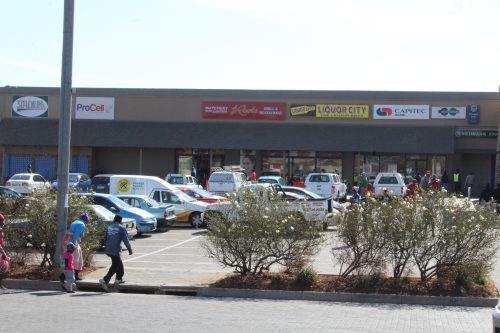
PHOTO: PIERCE VAN HEERDEN
With big malls slowly creeping into the Heidedal area, small business owners are feeling the loss of customers right in their pockets. Businessman, Gordan Russel Murison who has been doing business in Heidedal for 35 years now, says that many small businesses in the area have closed down because they cannot compete with big conglomerates and chain store prices.
“Unfortunately, we do have a problem. When they come up with a lot of competitive prices, it makes it difficult for small businesses in Heidedal to survive. They do take a lot of our business away,” said Murison.
“Also, small little tuck shops have taken a lot of our business, even though they offer people less quality. We are under a lot of pressure. There are many people in town but here we only have a small community of customers,” he added.
Not far from Murisson’s bottle store, which was quiet as he does not have a lot of customers during the day, lies Twin City Mall, which was buzzing with activity, in direct contrast to the small business.
In its earlier days the mall had a bad reputation for being a prime hot spot for car theft. Speaking to a few car guards, they said that since the mall has increased its security, they have seen improvement and the mall no longer has a bad reputation. One of the car guards mentioned that people are put at ease since there is both security and car guards to look after their cars while they are shopping. This has also made their work more pleasant.
– Seithati Semenokane
[email protected]